Luke Johnson
  • Home
  • About
  • Contact
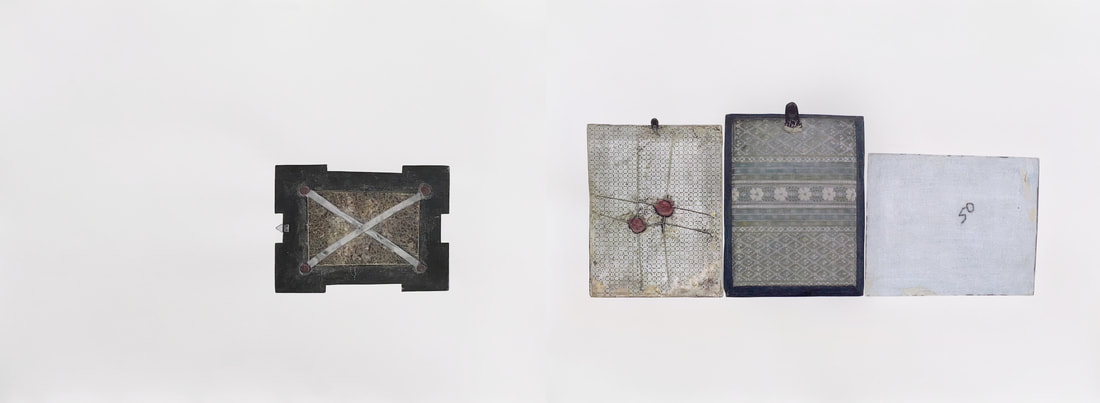
Private Collection (2017-2018)
Xerox, lithography, colored pencil, acrylic, chine-collé

selection from series below
essay by art historian Michael Woolley, from the exhibition catalogue Anthropocities, edited by Brittany Ball-Snellen

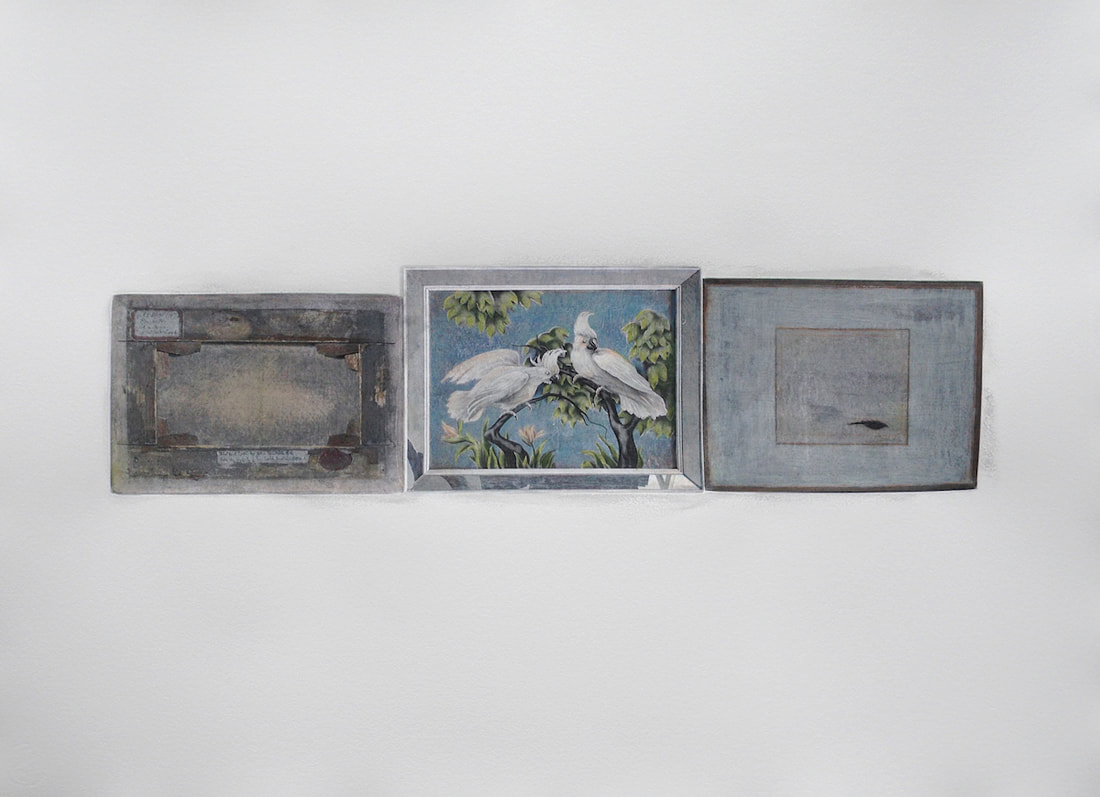
Luke Johnson recontextualizes the private art collections of the deceased mid-century middle class and raises questions about what it means to inherit a world built amidst unsustainable industrial consumerism. The two white cockatoos perched amid an improbable arrangement of leaves and branches would have at one time stared out upon a teak-filled parlour or living room. While still inscrutable and curious, they are flanked on either side by the scuffed, worn, and marked verso views of what we can only assume are similarly exotic reproductions of other birds. Their mirrored frame appears broken in spots and it lacks the luster here it would have had as an actual object.

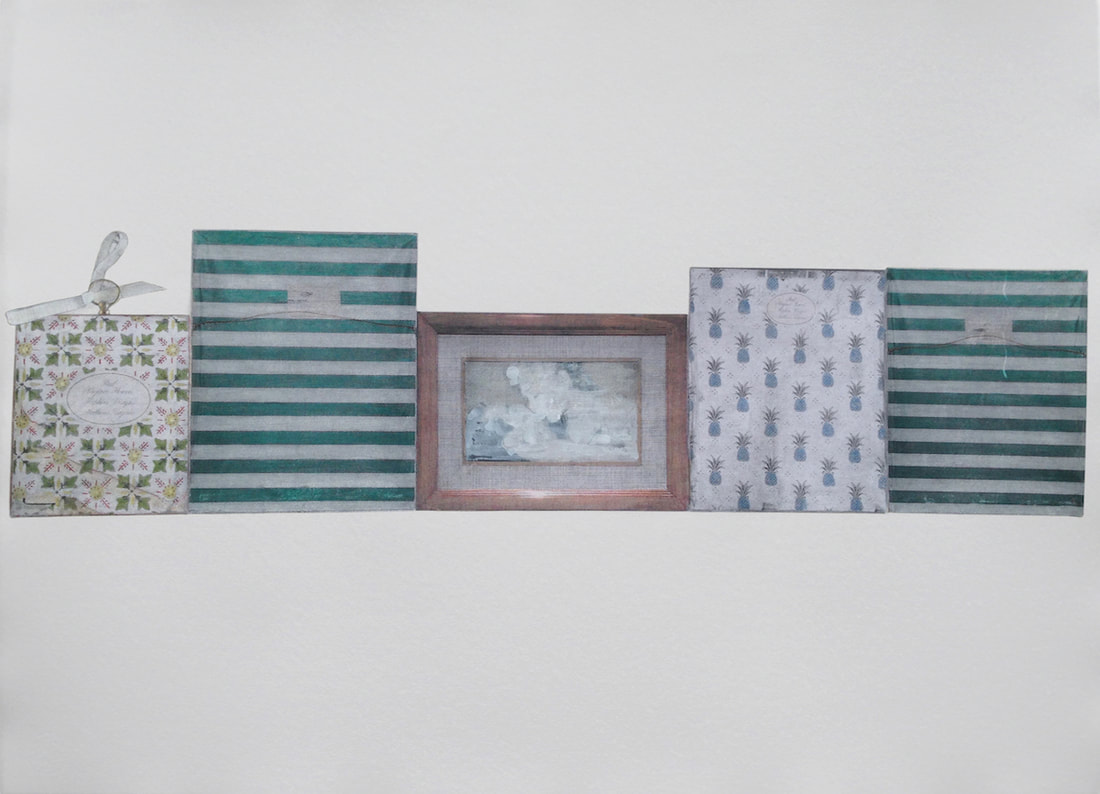
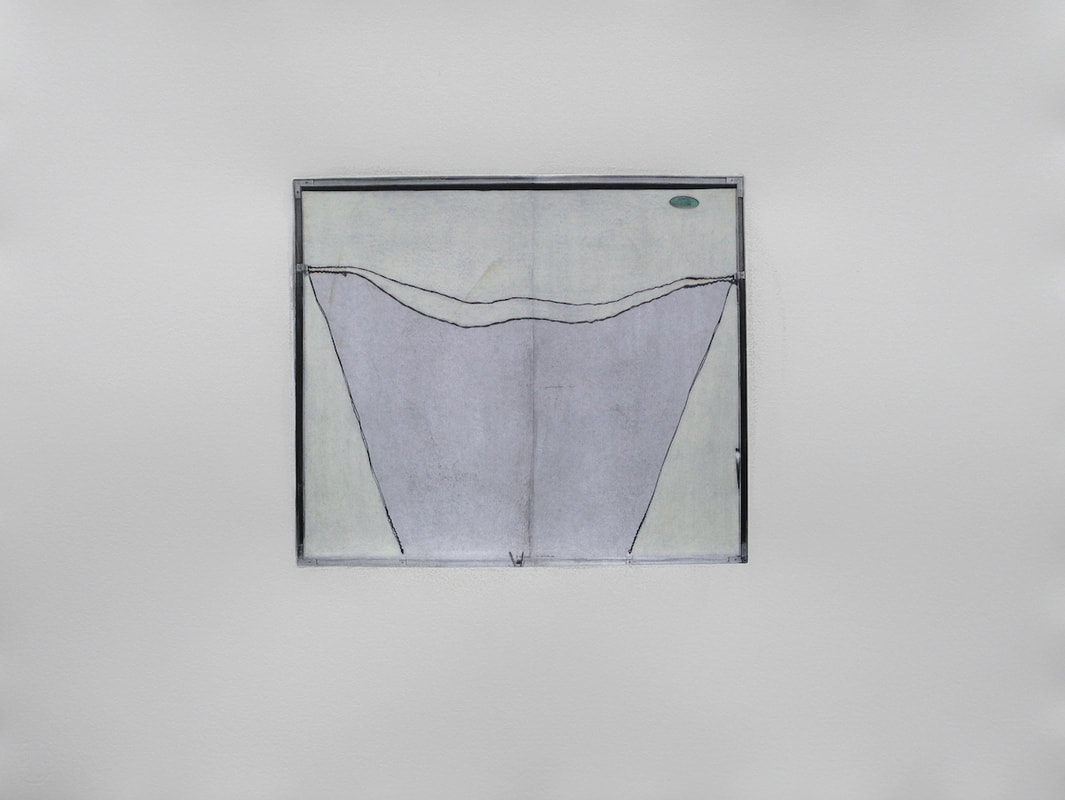
Whereas Johnson finds his raw material among the discarded and forgotten would-be records of idyllic suburban domesticity, they were purchased brand new from the department store downtown, or maybe the closest five-and-dime. Mirroring the production of the 'original' reproductions, these works have been iteratively captured, printed, and transferred, and now adorn in miniature a paper wall of their own. While they perhaps no longer carry with them the same sense of middle-class aspiration, these images retain still some sense of the normative colonial and capitalist narratives which produced them then and produce now the world that we have inherited.

These three works-within-a-work are brought together out of a time when they would have been signals of doing well-enough and having kept up with the Joneses. Scavenged from estate sales or antique dealers, they have been completely taken out of their original contexts and brought together to pose questions about that society that once manufactured, consumed, and valued them. Mass-produced reproductions of airbrush cockatoos evoke today a sense of kitsch, or maybe nostalgia for a time that is imagined as being unencumbered by anxiety. But our anxieties today-social, ecological, economic-are not at all removed from the time when these kinds of decorative works would have unironically brightened up the milquetoast interior of a post-war bungalow. Indeed, we have inherited our world today from those same living rooms on whose walls these birds once hung.
Proudly powered by Weebly